
Build vs Renovate in 2026 Which Option Gives Better Value Now
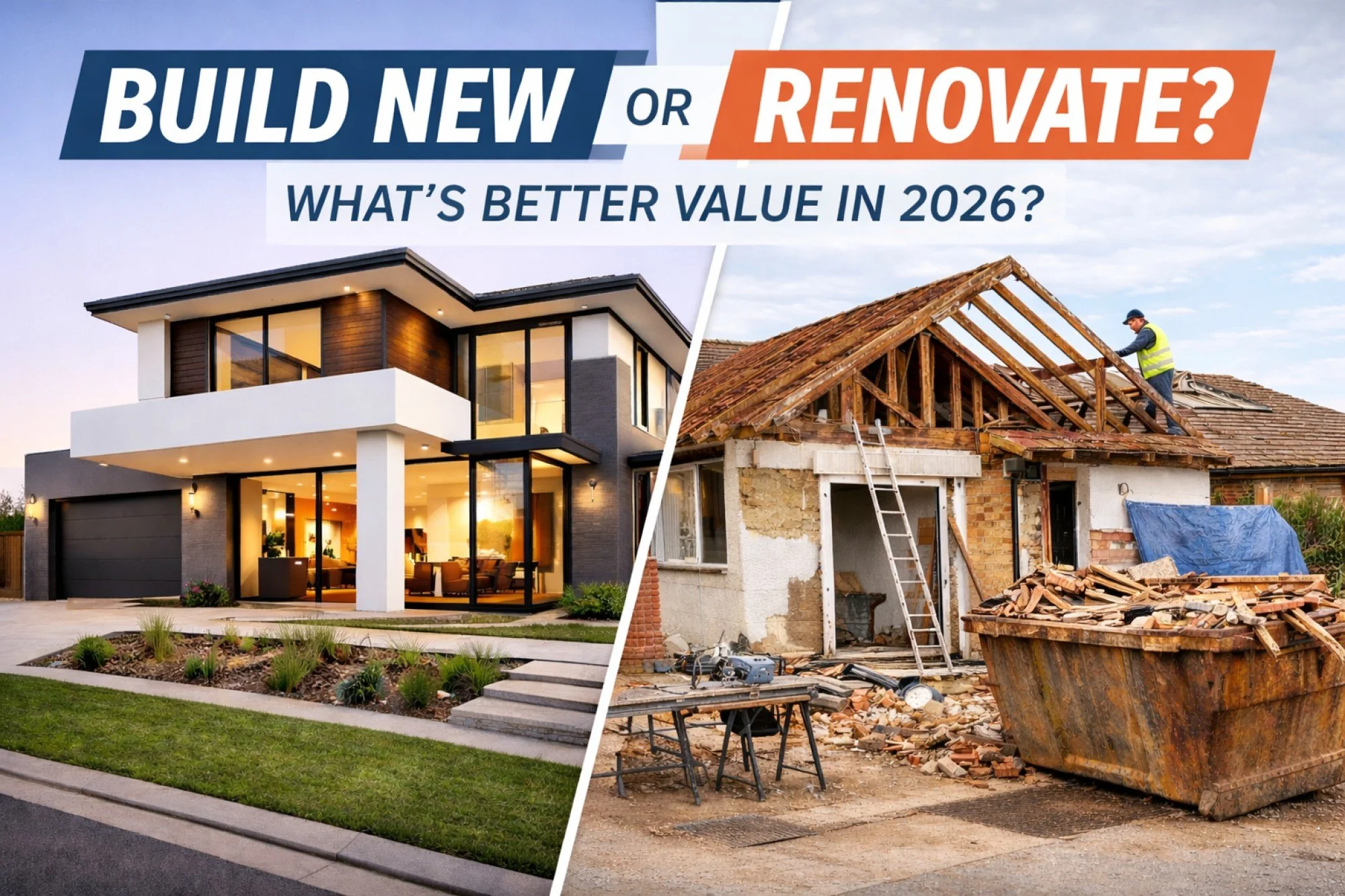
If you’re planning a major home upgrade in 2026, you’re not alone. Many Australian homeowners are weighing up the same important question:
Should I build a brand-new home, or renovate what I already have?
With construction costs stabilising, property values evolving, and lifestyle needs changing, deciding between building and renovating can have a major impact on both your finances and your future comfort.
At Prescom Constructions, we help homeowners navigate this decision every day. Here’s a clear guide to which option offers better value in 2026, plus practical tips to help you choose wisely.
Why Building New May Offer Better Long-Term Value
Building from scratch can deliver exceptional value, especially for homeowners wanting a modern, efficient, low-maintenance home.
Key benefits of building in 2026 include:
• Complete design freedom
Build exactly what you want without working around existing layouts or limitations.
• Better energy efficiency
New homes are built to today’s standards, meaning lower power bills and improved sustainability.
• Reduced maintenance costs
With brand-new materials, wiring, plumbing, and finishes, you avoid the surprise repair costs common in older homes.
• Strong resale appeal
Modern builds attract buyers looking for turnkey living with minimal work required.
Homeowner Tip:
If your current home requires major structural changes or updates to meet modern standards, building new may actually be more cost-effective than renovating.
When Renovating Makes Better Sense Right Now
Renovating is often the smarter choice when the home has good foundations and you love the location.
Renovating in 2026 can offer strong value through:
• Lower upfront costs
A renovation can be less expensive initially than a full rebuild.
• Increased property value
Strategic renovations in kitchens, bathrooms, and extensions can significantly boost resale value.
• Preserving character
Older homes often have charm and features that are hard to replicate in new builds.
• Staying in a prime location
Renovating allows you to upgrade without needing to relocate.
Homeowner Tip:
Focus renovations on high-return areas like kitchens, bathrooms, outdoor entertaining, and adding bedrooms.
Cost Differences in 2026: What Homeowners Need to Know
In 2026, pricing across the construction industry is more predictable than in previous years, but cost still depends heavily on scope.
Build costs are usually more straightforward because:
• The project starts fresh
• Budgets are clearer from the beginning
• There are fewer hidden surprises
Renovation costs can rise unexpectedly due to:
• Structural damage
• Asbestos removal
• Outdated plumbing or electrical systems
• Design constraints
Homeowner Tip:
Always include a contingency buffer of at least 10–20% when renovating older properties.
Timeframes and Disruption
Both options require planning, but disruption looks different.
Building new:
• Longer overall timeline
• Requires approvals, possible demolition, full construction phases
Renovating:
• Often faster depending on scope
• Can be stressful if living in the home during works
• May require temporary relocation for major renovations
Homeowner Tip:
If you need to live at home during the project, stage renovations carefully or consider building if disruption will be too high.
Which Option Gives Better Value in 2026?
Here’s a quick guide:
Building may be best if you want:
• A modern, energy-efficient home
• Lower long-term maintenance
• Full design control
• Maximum resale appeal
Renovating may be best if you want:
• A more affordable upgrade upfront
• To stay in a location you love
• To improve a solid existing structure
• To add value through targeted improvements
Final Homeowner Advice from Prescom Constructions
Before deciding, ask yourself:
• Is my current home structurally sound?
• Will renovations achieve what I want long-term?
• Would a new build offer better efficiency and value?
• Am I prepared for unexpected renovation costs?
The best value comes from choosing the option that fits both your lifestyle and your future plans.
Ready to Build or Renovate in 2026?
At Prescom Constructions, we specialise in both high-quality new builds and expertly managed renovations. Our team can guide you through the process, provide clear costings, and help you make the best investment for your home.